

Softshell vs Lightweight Shooting Vests: Which Is Right for You?
A cold start at the shooting ground can turn into a warm afternoon. Some days you want another layer across your body; on others, you want to keep your clothing as light as possible. That is where the choice between a softshell shooting vest and a lightweight clay shooting vest becomes useful.
Both give you cartridge storage and a sleeveless design. The difference is how they fit into the rest of your shooting clothing. In this guide, we use the REISTO® Apex Evo and The Stealthy One to help you decide which approach suits your days on the ground.
The quick answer
Choose softshell if you want a more substantial layer for cooler days, especially over a long-sleeved top or fleece.
Choose lightweight if you prefer a lighter vest for milder conditions, or want your base and mid-layers to provide most of the warmth.


What is the difference between softshell and a lightweight shooting vest?
A softshell vest brings some of the feel of an outdoor gilet into a shooting-specific garment. Its more substantial body makes it useful when you want additional coverage around your torso, alongside accessible cartridge pockets.
A lightweight shooting vest puts less emphasis on providing that extra layer of warmth. It can suit someone who gets warm easily, mainly shoots in mild weather, or already has a layering combination they like.
Lightweight does not automatically mean all-mesh. Shooting vests use different combinations of solid fabric, ventilated sections and stretch panels. Look at the individual design and how you plan to wear it, rather than relying on a material label alone.
Softshell vs lightweight: at a glance
On a small screen, swipe across the table to see all three columns.
| Consideration | Softshell vest | Lightweight vest |
|---|---|---|
| Main appeal | A more substantial layer across the body. | A lighter garment with shooting-specific storage. |
| Typical use | Cooler mornings and changeable days. | Milder days and shooters who prefer less warmth. |
| Layering | Works over a top or suitable fleece. | Works over light clothing or warmer layers when needed. |
| Movement | Sleeveless, with fit and layers still important. | Sleeveless, with panel design and fit still important. |
| Persistent rain | Weather resistance is not a substitute for waterproof outerwear. | Plan separate waterproof protection. |
| REISTO example | Apex Evo | The Stealthy One |
When would you choose the Apex Evo?
Think about the mornings when you arrive wearing a fleece and would welcome another layer across your body, but still want the familiar feel of a shooting vest. That is a useful starting point for the Apex Evo softshell vest.
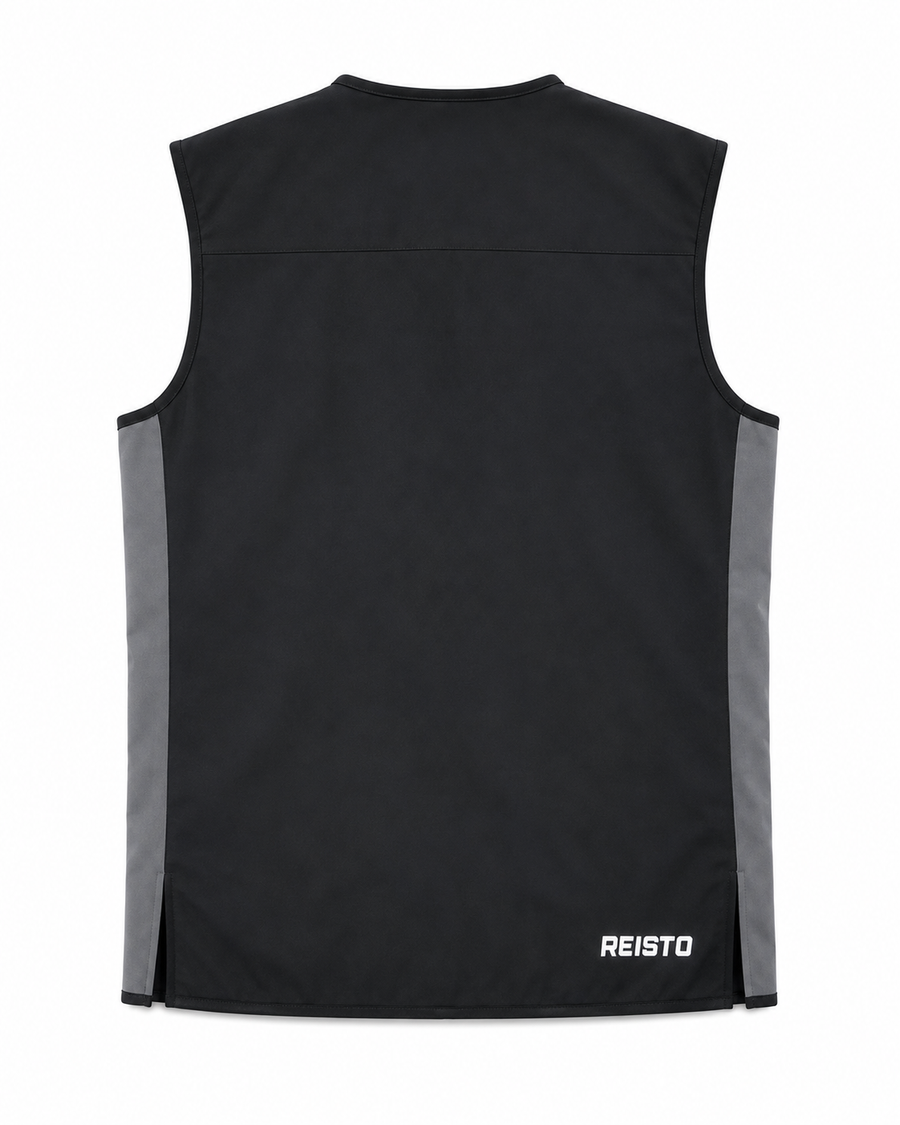
Its weather-resistant softshell construction and longer cut make it a practical layering option. The revised design includes larger dual front pockets, with two compartments on each side, reinforced shoulder panels and a small inside pocket.
Those features give it a clear purpose: comfortable coverage and useful storage during a day outside. It is particularly worth considering if you already own a light vest and regularly find yourself wishing for something more substantial.

For wet weather: the Apex Evo is weather-resistant softshell. It is not a replacement for a fully waterproof outer layer in persistent rain. Plan your clothing around the whole forecast, including the time spent waiting between stands.
For more about the design, read our Apex Evo softshell shooting vest guide.
When would you choose The Stealthy One?
If you prefer a lighter garment, The Stealthy One is the more natural starting point. It is designed for clay shooting across sporting, skeet and trap, with understated black styling and grey detailing.
The design combines shoulder padding, stretch panelling, dual front cartridge pockets, a discreet card pocket and rear storage. You still have the practical features of a dedicated shooting vest, in a lightweight format.
It is a useful choice for milder days, or for someone who prefers to adjust warmth through the clothing underneath. In cooler conditions, a suitable long-sleeved layer or fleece can make it part of a different outfit, provided the vest has enough room.


Mostly shoot in warm conditions? Our hot-weather shooting vest guide looks more closely at choosing for summer comfort.
Choose for the day you actually have
A chilly morning with time waiting between stands
Start by considering the Apex Evo over an appropriate base or mid-layer. Think about how you feel while standing still as well as walking around the ground. Your arms will still need suitable coverage from the clothing underneath.
A mild afternoon when you warm up quickly
A lightweight vest such as The Stealthy One may be the more comfortable starting point. Pair it with a light top and keep another layer available if the temperature drops later.
A day with a changeable forecast
Build an outfit you can adjust. Choose the vest for the conditions you expect through most of the shoot, then take an extra layer or waterproof as needed. Check that the combination still feels comfortable when everything is worn together.
Fit matters whichever material you choose
Compare your body chest measurement with the size guide for the specific vest. The same size label can fit differently between designs, so check both products separately.
Try the vest over the clothing you expect to wear shooting. Fasten it, raise your arms, turn through your upper body and reach towards the pockets. Look for comfortable movement without tightness across your chest or back, or fabric gathering awkwardly around your shoulders.
If you are between sizes or intend to wear thicker layers, follow the individual product's sizing advice. Buying several sizes larger can leave the vest moving around unnecessarily.
Read how a clay shooting vest should fit for a fuller checklist.
Which should you buy first?
Start with the conditions you shoot in most often. If you usually enjoy mild-weather rounds and prefer light clothing, look at The Stealthy One. If your regular shooting days involve cooler starts and you want another useful layer over your top or fleece, consider the Apex Evo.
Already own one type? Think about what is missing from your current outfit. A second vest is most useful when it solves a different problem, rather than simply duplicating what you already wear.
Frequently asked questions
Is a softshell shooting vest warmer than a lightweight vest?
Generally, a more substantial softshell body is the option to consider when you want extra warmth across your torso. How warm the complete outfit feels also depends on your layers, the conditions and your own preference.
Can I wear a lightweight shooting vest in winter?
Yes, as part of suitable clothing for the conditions. Allow room for warmer layers underneath and plan weather protection separately. Try the combination together, as adding a thick fleece changes the available movement room.
Can I wear the Apex Evo in summer?
It can suit cooler summer days. If you tend to overheat, or expect a hot afternoon, a lighter vest may be preferable. Choose for the forecast and how you feel in your clothing, rather than the month alone.
Is the Apex Evo waterproof?
It uses weather-resistant softshell fabric. For persistent rain, take a suitable waterproof outer layer; the vest also leaves your arms exposed to the weather.
Find the right vest for your next shoot
Explore the product details, photographs and individual size guides before choosing.
Shop the Apex Evo softshell vest
Still deciding? Browse all REISTO shooting vests or contact us for help choosing.

